
Ontario Standard Lease Form 2229E: 8 Gaps That Leave Landlords Exposed
Form 2229E is mandatory for most Ontario residential tenancies. It is not, by any stretch, a complete landlord protection document. The government designed it to establish a consistent minimum standard — who is renting, what unit, for how much, starting when. Everything beyond that baseline is left to the landlord to address in a signed addendum under Section 15.
Most landlords don’t address it. Then something goes wrong and they find out exactly what the standard lease doesn’t say.
Here are eight specific scenarios Form 2229E is silent on, and what that silence costs you at the LTB.
Gap 1: Pest Responsibility
Form 2229E contains no reference to pests — not who is responsible for reporting them, not who bears the cost of treatment, not what constitutes an infestation versus an isolated incident.
Under Section 20 of the RTA, landlords are required to maintain the rental unit in a good state of repair and keep it fit for habitation. In practice, this means that if a tenant reports a bed bug, cockroach, or mouse problem, the landlord is generally responsible for remediation — regardless of how the infestation started.
The real-world LTB consequence: If a tenant brings a second-hand mattress into a clean unit and introduces bed bugs, and your lease is silent on pest responsibility, the default position under Section 20 puts treatment costs on you. A clause in your addendum establishing that the tenant must promptly report any pest sighting in writing, and that infestations traceable to the tenant’s belongings or behavior are the tenant’s financial responsibility, shifts that liability where it actually belongs. Without it, you’re funding extermination for a problem the tenant caused.
Gap 2: Smoking
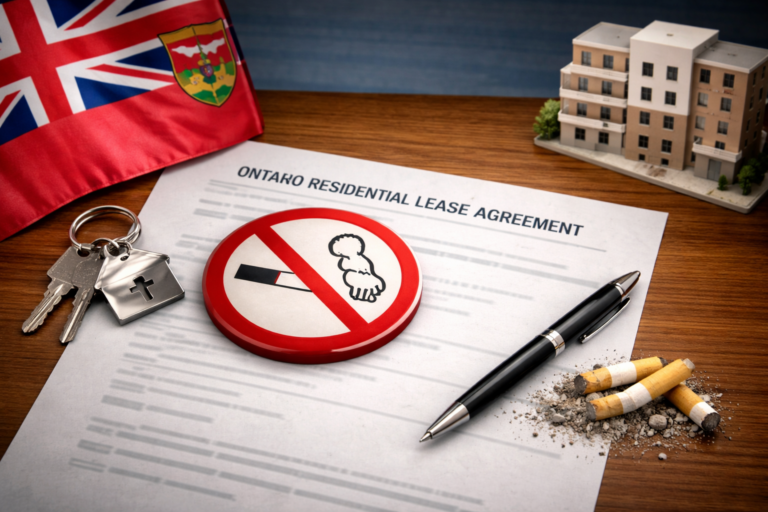
Form 2229E includes a checkbox. Three options: smoking permitted everywhere, permitted in specified areas, or not permitted anywhere. That’s the complete extent of the form’s smoking provisions — no definitions, no consequences, no scope description.
The real-world LTB consequence: If you check “no smoking” and a tenant smokes anyway, you have no written definition of what smoking includes (tobacco? cannabis? vaping?), no statement that the balcony is covered by the restriction, and no clause establishing that smoke damage is the tenant’s financial liability. At an L10 application for remediation costs, an adjudicator will look at the signed lease documents. A checkbox does not establish a liability framework. Smoke remediation — ozone treatment, repainting, HVAC decontamination — can exceed $10,000 in a single unit. That cost needs to be grounded in signed lease language, not a box that was checked. Adding a no-smoking clause is integral.
Gap 3: Unauthorized Occupants
Form 2229E names the tenants. It says nothing about who else may reside in the unit, for how long, or what landlord consent is required before an additional person moves in permanently.
The real-world LTB consequence: Under the RTA, a person who occupies a rental unit with the tenant’s consent and the landlord’s implied acquiescence can eventually establish occupancy rights that complicate the tenancy significantly. If your signed tenant moves a partner into the unit and that partner has been there for an extended period, removing them — particularly if the original tenant vacates — becomes a complicated legal question. A clause specifying that only the named tenants on the lease may reside in the unit as their primary residence, and that any additional permanent occupant requires prior written landlord consent, establishes the baseline you need to manage occupancy changes before they become entrenched problems.
Gap 4: Entry Notice Protocols Beyond the Legal Minimum
The RTA requires 24 hours’ written notice before entry for non-emergency purposes, with a specified reason and a time window between 8 a.m. and 8 p.m. Form 2229E restates this obligation but adds nothing to it.
The real-world LTB consequence: The legal minimum tells you that you need to give notice. It says nothing about how — email, text, written note slipped under the door, or formal letter. If a landlord serves notice by text and the tenant later claims they never received it, you have a disputed-delivery problem with no written protocol to fall back on. A clause in your addendum specifying the accepted methods of notice delivery — email to the address provided at signing, or written notice delivered to the unit — creates a documented standard both parties have agreed to. It also prevents a tenant from claiming retroactively that your email doesn’t count as proper written notice. Make sure to also review proper entry notice protocols.
Gap 5: Parking Enforcement
Form 2229E includes a section for parking — how many spots are included, the monthly cost if any, and whether a parking space is provided. It says nothing about what vehicles may use the space, what happens to unauthorized vehicles, or what rules govern the parking area.
The real-world LTB consequence: A tenant assigned one parking space who regularly parks two vehicles — one registered to a roommate not on the lease, one up on blocks for months at a time — presents a problem Form 2229E gives you no written authority to address. Without a clause specifying that only the vehicles listed by plate number at signing may use the assigned space, that the space is for operational personal vehicles only, and that unauthorized vehicles are subject to removal at the tenant’s cost, you have limited grounds to enforce the parking area at all. Disputes over parking are common and are often dismissed at the LTB when landlords can’t point to a written rule the tenant agreed to.
Gap 6: Storage Rules
Many rental properties include a storage locker, basement storage area, or garage space. Form 2229E acknowledges the existence of parking and lockers in general terms but establishes no rules for their use.
The real-world LTB consequence: A tenant who uses their storage locker to stockpile flammable materials, who fills a shared basement space beyond their designated area, or who leaves items in common areas is creating a fire hazard and a liability exposure — and without written storage rules, you have no clear lease provision to point to when asking them to remove it. A storage clause should specify what the assigned space is, what it may and may not be used for (no flammable materials, no items that attract pests, no overflow into common areas), and what happens to items left beyond the tenancy end date. The last point matters: abandoned property at lease end is subject to specific RTA rules, and having a written clause about storage end-of-tenancy procedures gives both parties clear expectations.
Gap 7: Subletting Restrictions
The RTA allows tenants to sublet their rental unit with the landlord’s consent, and prohibits landlords from unreasonably withholding that consent. Form 2229E does not define what a reasonable sublet request looks like, what information the tenant must provide, or what the process is for making and responding to such a request.
The real-world LTB consequence: Without a written subletting process in your addendum, a tenant who wants to sublet for three months while traveling may simply hand keys to a friend and inform you after the fact — or not at all. If damage occurs during a subletting period, establishing liability becomes complicated when there’s no documented approval process. A clause specifying that any sublet request must be made in writing with a minimum notice period, that the landlord requires the proposed subtenant’s name and contact information for review, and that sublet approval is conditional on the subtenant meeting the same screening criteria as a new applicant gives you a legitimate process to follow — and a clear record if a tenant sublets without following it.
Gap 8: Lease-End Painting Obligations
Form 2229E is silent on the condition in which the unit is to be returned at the end of the tenancy, beyond the general RTA standard that tenants are responsible for damage beyond normal wear and tear.
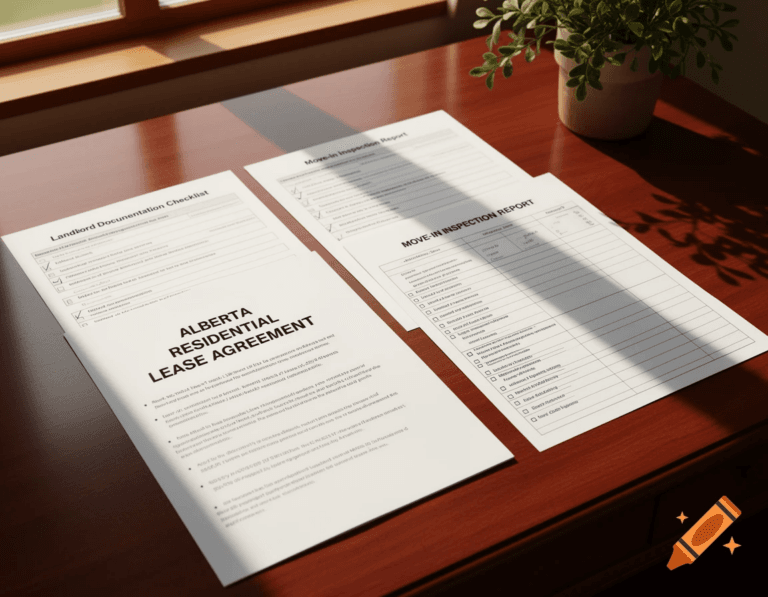
The real-world LTB consequence: “Normal wear and tear” is the phrase that generates more LTB disputes per square foot than almost any other concept. Repainting walls to a neutral color after years of tenancy is generally considered wear and tear. Repainting walls that were painted a deep red, patching dozens of nail holes, or covering crayon drawings on children’s bedroom walls is damage. If your lease does not specify the condition the unit was delivered in — including paint color and wall condition, documented in a signed move-in inspection — you will spend your LTB hearing arguing about what the walls looked like three years ago.
A clause establishing the move-in paint condition, restricting the tenant from painting or making alterations without prior written consent, and specifying that any unauthorized alteration must be restored to original condition at the tenant’s expense before the end of the tenancy creates a written baseline and a clear obligation. Paired with a signed move-in condition report and dated photographs, this clause is the difference between a successful L10 claim for repainting costs and an adjudicator deciding it was just normal wear and tear.
Why These Eight Gaps Matter Together
Each of these gaps is an independent exposure — a real scenario where, without written language, the RTA default position or the absence of any rule leaves you without recourse. Taken together, they illustrate why the standard lease was never designed to be your only document.
Section 15 of Form 2229E exists specifically so landlords can add enforceable terms that go beyond the government baseline. The mechanism is there. The question is whether you’ve used it before a tenancy begins — because adding terms after signing requires the tenant’s voluntary agreement, and that’s a conversation you don’t want to be having after a problem has already surfaced.
The Ontario Landlord Protection Addendum + Kit addresses all eight of these gaps with professionally drafted clauses built for Section 15 of Form 2229E — covering everything from pest responsibility and parking enforcement to subletting procedures and lease-end obligations. It also includes 49 additional landlord forms covering every stage of a tenancy from move-in inspection to LTB documentation.
If you manage properties in multiple provinces, the gaps in Ontario’s Form 2229E are mirrored by similar weaknesses in BC’s RTB-1 and Alberta’s government lease forms. The Complete Landlord Forms Collection covers all provinces and territories in a single package.
Frequently Asked Questions
Can I add these clauses after the lease has already been signed?
Yes, but only with the tenant’s voluntary written agreement. Mid-tenancy amendments require a signed addendum that both parties agree to — you cannot unilaterally add terms after signing. This is why presenting a complete Section 15 addendum at the initial lease signing is the correct approach – not to mentioning making sure you use our tenant screening checklist for to avoid problem tenants.
If I include a void clause in my addendum by accident, does it invalidate the rest?
No. Under the RTA, a clause that is void (because it removes a tenant right established by the Act) is simply unenforceable — it doesn’t invalidate the rest of the addendum or the lease. However, including void clauses creates confusion and reduces your credibility at the LTB, so it’s worth making sure every clause in your addendum is RTA-compliant.
Does the move-in inspection report need to be signed by both parties?
To be most effective as LTB evidence, yes. A move-in report signed only by the landlord is still useful, but a report signed by both parties is significantly harder for a tenant to challenge. Complete the inspection together, walk through every room, document existing damage in writing and photographs, and have both parties sign the same document before the tenant takes possession.
What is an L10 application and when do I use it?
An L10 (Application to Collect Money a Former Tenant Owes) is the LTB form used to seek compensation from a tenant after the tenancy has ended — for unpaid rent, damage, or other costs. It must be filed within one year of the tenancy end date. The strength of an L10 application depends almost entirely on documentation: signed lease clauses establishing liability, before-and-after condition reports, and itemized remediation invoices. Also be sure to review the documentation needed at the LTB for additional information.
How often is Form 2229E updated?
The Ontario government updates Form 2229E periodically. Always download the current version from the official Ontario government website before presenting it to a new tenant. Using an outdated version does not void the tenancy, but it can create procedural complications if a tenant later requests the current version.
Form 2229E is the starting point — not the finish line. There’s even enforceable pet restrictions which is discussed in another post. Every gap on this list is a scenario that has played out at the LTB, cost landlords money they didn’t need to lose, and could have been addressed with a signed clause written before the tenancy began. The Ontario Landlord Protection Addendum + Kit is built to close these gaps systematically, so you’re not discovering what your lease didn’t say at the worst possible time.
This article is for informational purposes only and does not constitute legal advice..