

BC Smoking Clause: How to Write a No-Smoking Rule That Actually Holds Up
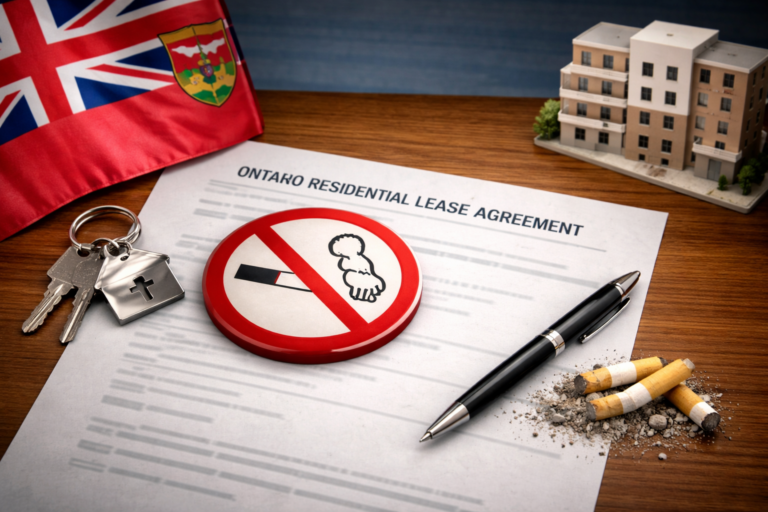
BC landlords can ban smoking and vaping in a rental unit, but only if the rule is written clearly into the tenancy agreement. That matters because the RTB will enforce what is signed, not what was assumed, and a vague “no smoking” line is much easier to challenge than a properly drafted clause.
The good news is that BC gives landlords real drafting power here. If you want a smoke-free rental, the clause just has to say so in a way that covers the unit, the balcony, and the rest of the property where you want the restriction to apply.
What BC Law Allows
BC’s Residential Tenancy Branch says landlords can make rental units smoke-free, and that the restriction must be stated in the tenancy agreement. If the agreement does not contain a no-smoking or no-vaping clause, tenants are generally allowed to smoke or vape in the unit and on balconies, subject to the usual tenancy and strata rules.
BC also treats smoking and cannabis as related but not identical issues. A no-smoking clause applies to cannabis smoking as well, but it does not automatically cover vaping cannabis unless the clause says so. That means a landlord who wants a truly smoke-free and vape-free tenancy should write both restrictions into the lease.
This is one of the places where the BC pillar matters. The broader documentation system is laid out in the BC Landlord Protection Addendum + Kit, which is designed to sit beside the RTB-1 and fill the gaps the standard form leaves open.
What Makes the Clause Enforceable
A useful BC smoking clause has four jobs: define smoking, define the areas covered, define the breach, and define the consequence. If it only says “no smoking,” it is better than nothing, but it is not ideal.
The clause should define smoking broadly enough to include:
- Cigarettes.
- Cigars.
- Pipes.
- Cannabis smoking.
- Vaping, if you want that banned too.
- Any lit or heated substance that produces smoke or vapour.
It should also define the covered areas:
- The rental unit.
- The balcony or patio.
- Common areas of the property.
- Any exterior area you want covered, if the clause is written that way.
BC’s official guidance says landlords can ban smoking, vaping, and growing cannabis plants in rental units, but the restriction must be in the agreement. If you want the rule to apply beyond the unit itself, write that scope into the clause.
A Full No-Smoking Clause
If your goal is a hard prohibition, keep the language direct. A good no-smoking clause should say that no tenant, occupant, guest, or invitee may smoke or vape anywhere in the unit or on the property where the restriction applies.
The clause should also say:
- The rule is a material term of the tenancy.
- Breach of the rule is a tenancy violation.
- The tenant is responsible for any smoke-related damage, odour, or cleaning costs.
- The restriction applies to everyone the tenant brings onto the property.
That last part matters. If the lease only restricts the tenant, a guest’s cigarette on the balcony can become an argument instead of a clear breach. The clause should also make it clear that the tenant is responsible for the behaviour of occupants, guests, and invitees.
A Smoke-Free / Vape-Free Addendum
If you want the clause to be more detailed, a separate addendum is cleaner than trying to cram everything into the RTB-1. This is where you can spell out exactly what the tenant is agreeing to in writing.
A strong addendum should include:
- A statement that the unit is smoke-free.
- A statement that vaping is also prohibited, if that is your policy.
- A statement that smoking cannabis is prohibited.
- A statement that the tenant cannot grow cannabis unless authorized by law.
- A statement that smoking is prohibited in the unit, on balconies, and in common or exterior areas covered by the clause.
- A statement that violating the rule is a material breach.
BC’s own smoke-free housing materials use this kind of structure, including broad definitions of smoking and a statement that the restriction covers the unit and the residential property. That is exactly the kind of language that gives a landlord a cleaner enforcement path later.
What Happens When a Tenant Breaks the Rule
If the tenant smokes or vapes in a unit that was clearly leased as smoke-free, the landlord should document the breach immediately. Do not start with a verbal warning and assume that is enough. Start with a written record: date, time, what happened, how you learned about it, and what evidence you have.
If the issue continues, the landlord can treat it as a tenancy breach. BC guidance says tenants who violate a no-smoking clause may have to pay for smoking-related damage, and the landlord can choose to end the tenancy if the issue persists. The actual remedy depends on the facts, the wording of the lease, and the quality of the evidence.
If you later need to prove the breach, the documents matter more than the complaint:
- The signed lease or addendum.
- A written complaint or observation record.
- Photos of ash, burns, residue, or smoke damage.
- A written notice to the tenant.
- Any follow-up communications.
That is the practical value of document-driven leasing. The clause gives you the rule, and the paper trail gives you the enforcement path.
Smoke Damage and Costs
BC says tenants are financially responsible for smoke-related damage. That means odour remediation, repainting, deep cleaning, and other repair costs can be claimed if they are tied to the breach and properly documented.
The easiest mistake to make is assuming you can just state the cost. You cannot. You need:
- Move-in photos showing the original condition.
- Move-out photos showing the smoke damage.
- Written estimates or invoices from cleaners or restoration contractors.
- A clear explanation linking the costs to the smoking breach.
If the unit needs full odour treatment, repainting, or duct cleaning, keep itemized receipts. If you later file for a deduction or dispute resolution, the RTB will want the costs connected to the actual damage, not just a landlord estimate.
This is where the broader file structure matters too. The BC RTB documentation cluster should connect back to the pillar, and it will be especially important for proving smoking damage claims in a future dispute.
Cannabis, Vaping, and Balconies
BC’s smoking guidance makes a few points landlords miss:
- No-smoking clauses apply to cannabis smoking too.
- No-smoking clauses do not automatically apply to cannabis vaping unless you say so.
- If a tenancy agreement prohibits smoking on the property, smoking can only be done off the property.
- In multi-unit buildings, tenants also face BC’s broader distance rules around openings and common areas.
That means your clause should not be vague. If you want a smoke-free and vape-free building, say that. If you want the rule to apply to balconies and patios, say that too. Leaving that out creates a loophole that a tenant can use later.
Frequently Asked Questions
Can I ban smoking in BC?
Yes. BC landlords can make a rental unit smoke-free, but the restriction must be in the tenancy agreement.
Does a no-smoking clause include cannabis?
Yes, for smoking cannabis. BC guidance says no-smoking clauses also apply to cannabis smoking, but not automatically to cannabis vaping.
Can I ban smoking on the balcony?
Yes, if the clause says the restriction applies to the balcony or patio. If you want that rule, write it into the lease clearly.
What if my tenant breaks the smoking rule?
Document the breach, serve written notice, and preserve evidence of any damage or repeated violation. BC guidance says tenants may have to pay for smoking-related damage, and the landlord can choose to end the tenancy if the issue continues.
A BC smoking clause works when it is specific, written, and signed before the tenancy begins. If you want the rule to cover smoking, vaping, cannabis, balconies, and the rest of the property, that needs to be in the lease from day one. The BC Landlord Protection Addendum + Kit gives you the kind of clause language that actually helps when a smoke dispute reaches the RTB.s the kind of lease language that lets landlords enforce pet rules without guessing later.
This article is for informational purposes only and does not constitute legal advice.